
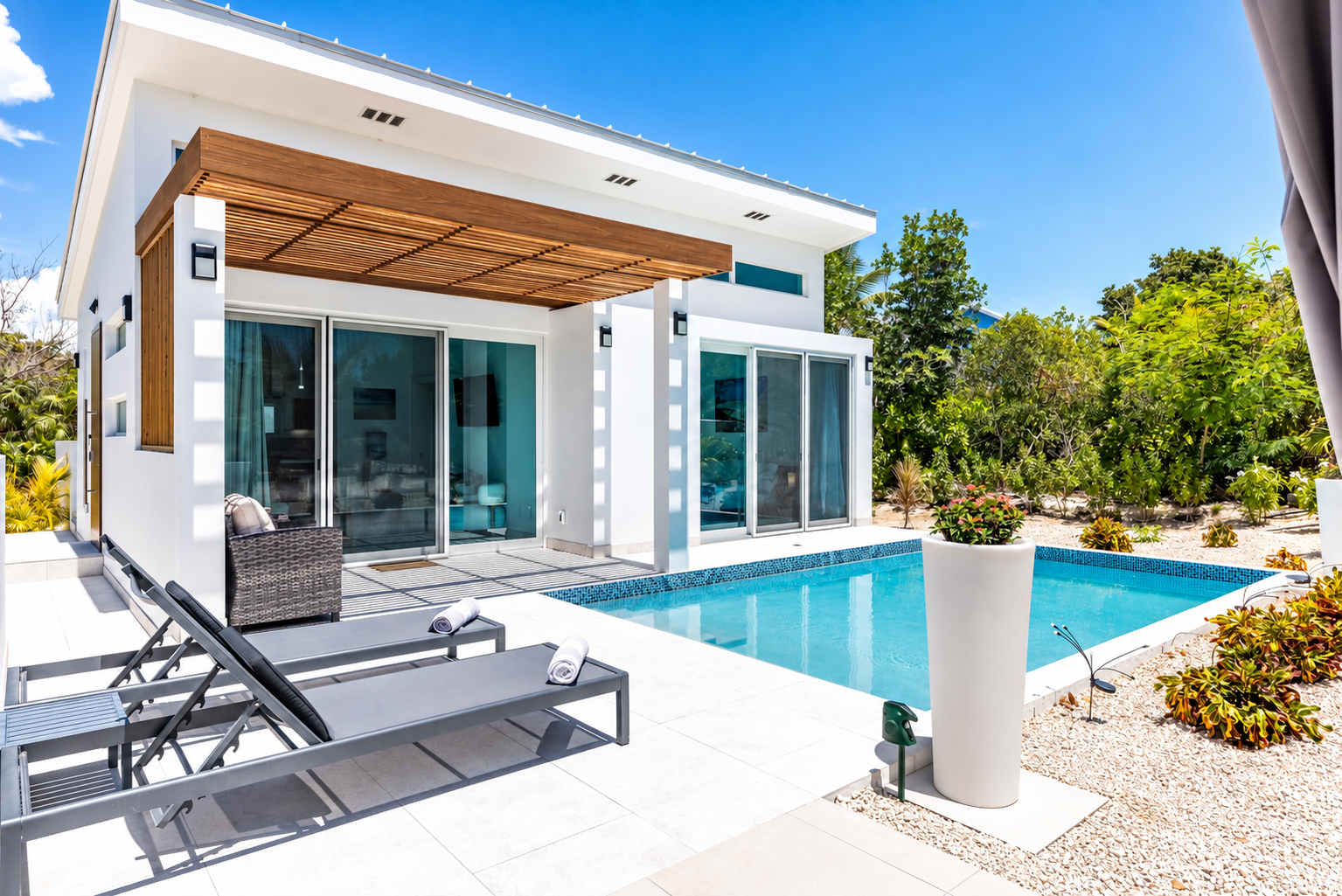
Thoughtful design for life in the Turks and Caicos Islands
Great island architecture feels effortless. Open spaces, natural light, shaded terraces and a seamless connection between indoors and out create the relaxed atmosphere people come to Turks and Caicos to enjoy.
Behind that simplicity, however, are important decisions about site orientation, materials, ventilation, structural performance and the way a property will be used. In a tropical coastal environment, good design must do more than look beautiful. It must respond to the climate, withstand the elements and remain practical to operate and maintain.
For overseas buyers planning a vacation home or investment property in the Turks and Caicos Islands, these decisions are particularly important. When you are managing a project from abroad, thoughtful planning at the outset can help reduce avoidable costs, simplify maintenance and create a property that delivers lasting value.
Principles we design by
Indoor–outdoor living — expansive openings, shaded terraces and outdoor rooms.
Natural ventilation — layouts that capture prevailing breezes.
Shade and orientation — comfort and lower running costs.
Durable materials — finishes chosen to age gracefully in salt air and sun.
Calm, natural palettes — interiors that let the setting take centre stage.
The most successful designs consider how these spaces will function throughout the day. Covered terraces can provide welcome shade, while carefully positioned windows and doors connect the interior with gardens, pools and surrounding views.
For vacation rentals, outdoor spaces can also be a defining feature of the guest experience. A well-designed pool deck, comfortable outdoor dining area or private terrace can make a property more memorable without requiring unnecessarily complicated design.
Natural Ventilation and Cooling
Warm temperatures and humidity make ventilation an important consideration. Building layouts should take advantage of prevailing breezes where the site and surrounding conditions permit, using appropriately positioned windows, doors and openings to encourage airflow.
Ceiling heights, shaded openings and covered outdoor spaces can also contribute to comfort. However, natural ventilation should be considered alongside mechanical cooling and humidity control, particularly in bedrooms, enclosed bathrooms and properties that may remain unoccupied for extended periods.
For owners who live overseas, reliable air-conditioning, suitable humidity management and efficient controls are practical considerations that help protect the building, furnishings and finishes.
Orientation, Shade and Solar Exposure
The position of a building on its site influences natural light, indoor temperatures, privacy, views and outdoor comfort.
A good design considers the sun’s movement throughout the day, the location of neighbouring buildings, prevailing winds and the areas where people are likely to spend the most time. Roof overhangs, covered terraces, pergolas, landscaping and carefully positioned glazing can help manage direct sunlight.
The objective is not simply to maximise glass or views. It is to balance daylight, shade, privacy and cooling requirements so that the property remains comfortable and practical to operate.
Materials for a Coastal Environment
Salt-laden air, intense sunlight, humidity and wind-driven rain can place additional demands on building materials and components.
Material selection should consider long-term performance as well as appearance. Depending on the application, this may include corrosion-resistant fixings, suitable exterior coatings, durable window and door systems, appropriate roofing details and finishes designed for humid or coastal conditions.
The connections between materials are just as important as the materials themselves. Flashings, sealants, drainage details, waterproofing and installation quality all influence how well a building performs over time.
A finish that looks attractive at completion may not be the most economical choice if it requires frequent replacement or specialist maintenance. For overseas owners, durability and ease of maintenance deserve particular attention.
A Calm, Natural Palette
Island architecture often benefits from a restrained palette that allows the surrounding landscape, water and natural light to take centre stage.
Natural textures, neutral colours and carefully selected accents can create an understated, timeless appearance. The same principle can extend to flooring, cabinetry, outdoor furniture and landscaping.
For vacation rentals, materials and furnishings should also be selected for durability, ease of cleaning and straightforward replacement. A beautiful interior is most successful when it continues to look good after repeated guest use.
Designing for Performance
Start With a Clearly Defined Objective
Before design begins, establish what the property needs to achieve.
There is a significant difference between designing a private vacation home for personal enjoyment and creating a property intended to generate rental income. Both can be beautiful, but their priorities, layouts, specifications and operating requirements may differ considerably.
A private home may place greater emphasis on personal preferences, family routines, storage, privacy and spaces tailored to the owner’s lifestyle.
A vacation rental must also consider the guest experience, the number and configuration of bedrooms, bathroom provision, luggage storage, circulation, housekeeping, durability and the practical demands of frequent occupancy.
For an investment property, the design should support the intended operating model and financial objectives. Construction cost, likely maintenance requirements, utility consumption, replacement cycles and guest appeal all influence the property’s long-term performance.
Defining these objectives early helps guide decisions and reduces the risk of spending money on features that do not serve the intended purpose.
Design for the Way the Property Will Be Used
The number of bedrooms alone does not determine how successfully a property will function. Layout, circulation, privacy, bathroom access and the relationship between shared and private spaces all influence usability.
For a vacation rental, consider how guests arrive, where they store luggage, how they move between bedrooms and living areas, and whether outdoor spaces can be enjoyed without disturbing others.
Kitchens, laundry areas, owner storage and housekeeping facilities should also be considered during planning. These operational details may be less visible than a striking pool or dramatic living room, but they can make a substantial difference to the ease of managing the property.
Where owners intend to use the property themselves as well as rent it to guests, the design should accommodate both uses without compromising either.
Design for the Full Cost of Ownership
The initial construction budget is only one part of the financial picture.
A property also has ongoing costs associated with electricity, air-conditioning, water, pool equipment, landscaping, cleaning, maintenance, insurance and eventual replacement of building components and furnishings.
Design decisions can influence many of these costs. Efficient layouts, suitable glazing and shading, accessible equipment, durable finishes and straightforward service access can all contribute to more manageable long-term ownership.
For overseas buyers, ease of maintenance is especially valuable. Equipment that is difficult to access, unusual finishes that are hard to replace or systems that require specialist servicing can create unnecessary complications when the owner is not locally available.
A useful question to ask at every design stage is: How will this decision affect the cost, operation and maintenance of the property over the next ten years?
Plan for Hurricanes, Heavy Rain and Coastal Conditions
Building in the Turks and Caicos Islands requires appropriate attention to severe weather and the coastal environment.
The design team should consider applicable building requirements, structural wind resistance, roof connections, openings, drainage, site levels and the management of rainwater. Exposure varies by location, so the design response should reflect the specific site rather than rely on a generic island specification.
Landscaping, terraces, pool areas and external equipment should be considered as part of the overall site plan. Their location and detailing can influence drainage, access and the property’s resilience during severe weather.
Appropriate structural, architectural and engineering professionals should establish the design requirements for each project and confirm compliance with the applicable standards and approvals.
Planning to buy land in Turks and Caicos? Visit our Investment Resouce Library for a range of valuable reference works and resources
BECC Development — Design • Build • Deliver.